What are the different types of portals in Salesforce?
Salesforce offers various portals designed to meet specific business requirements, enabling seamless collaboration, engagement, and efficiency. Here’s an overview of the key portal types:
Customer Portal:
A self-service platform where customers can resolve issues, manage accounts, track orders, and access knowledge base articles. It empowers customers with 24/7 support, reducing reliance on agents and enhancing satisfaction.
Partner Portal:
Built for external business partners like distributors and resellers, Partner Portals streamline collaboration through features like lead sharing, deal registration, opportunity management, and co-marketing tools, helping drive sales and business growth.
Employee Portal:
Designed for internal users, these portals centralize HR tasks, provide access to company resources, and improve internal collaboration, making workflows more efficient.
Self-Service Portal:
A specialized portal that focuses on enabling customers to perform common tasks independently, such as resetting passwords, submitting support tickets, or tracking order statuses. It’s ideal for businesses looking to minimize support workloads and empower users.
Community Portal:
A platform for building branded online communities where customers, employees, and partners can collaborate, share insights, and find solutions. These portals foster deeper relationships and encourage knowledge-sharing.
Vendor Portal:
Tailored for suppliers and vendors, these portals facilitate order management, invoice submission, and streamlined communication, ensuring smooth business operations.












 Salesforce Customer Portals









 Case Deflection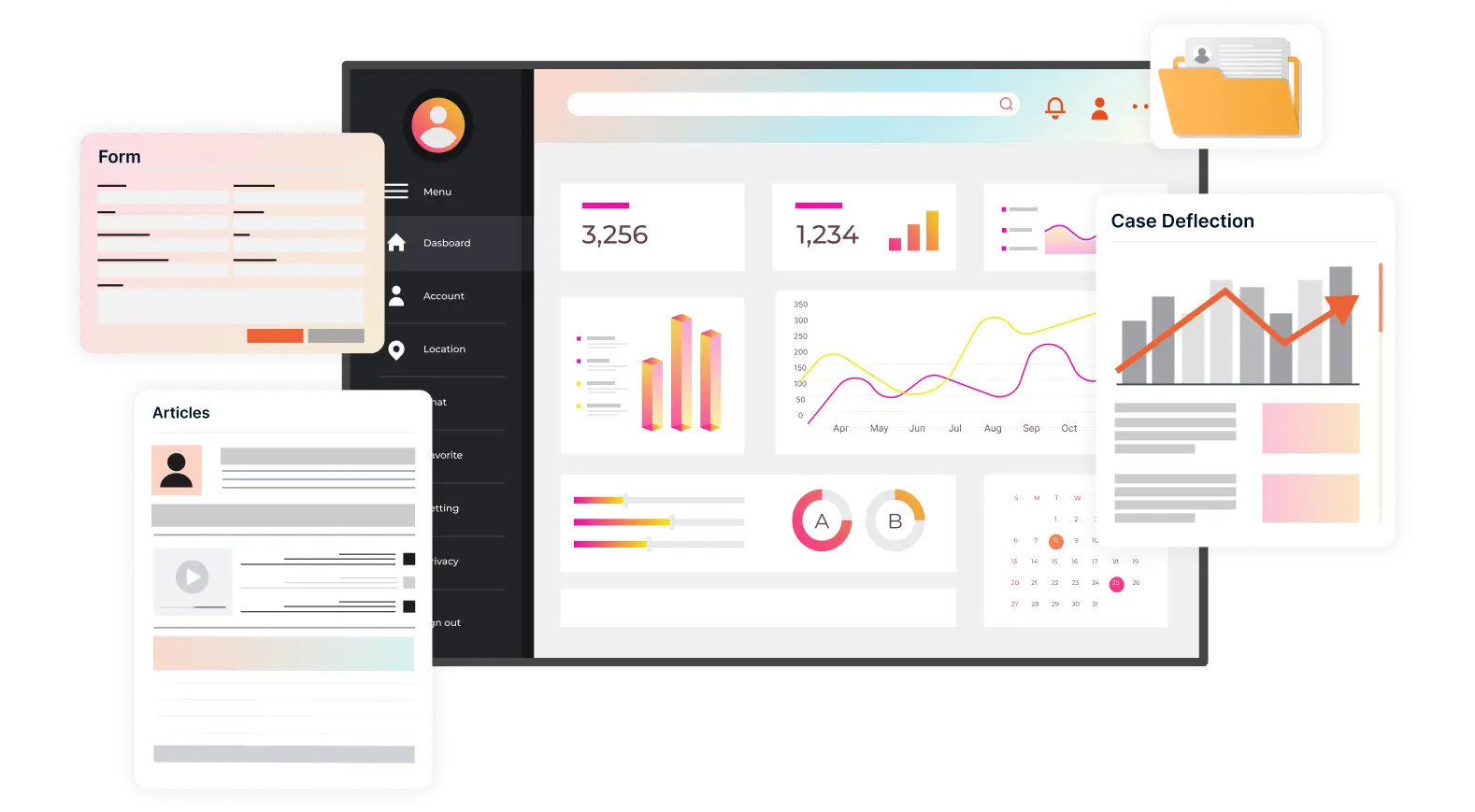


























 Salesforce